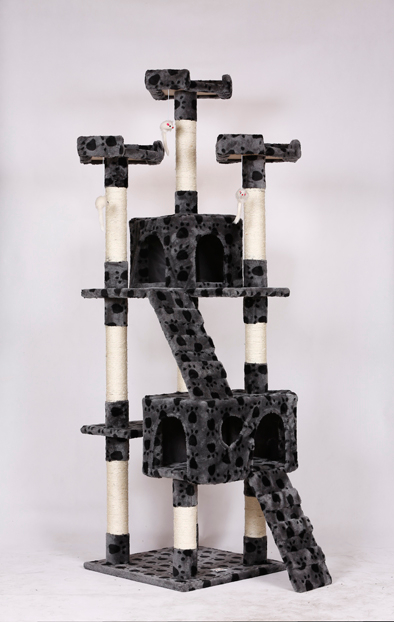
The pet products category is in the middle of a structural shift. Overall industry growth has slowed to around 4-5% (China pet market: RMB 336.5B in 2026, +4.3%, per the 2026 China Pet Industry Development Report), yet a few segments are growing far faster. Furniture-grade cat trees are one of them.
What the numbers actually say
- The global pet furniture market was valued at USD 4.47B in 2025 and is projected to grow from USD 4.74B in 2026 to USD 8.24B by 2034 — a CAGR of 7.17% (Fortune Business Insights).
- North America dominates with a 35.39% share (2025), and cats drive roughly 45% of pet-type demand in the category.
- At the CIPS pet sourcing conference in Guangzhou on November 12, 2026, Wayfair's sourcing manager revealed a supply-demand mismatch: in North America, cat trees priced USD 75-125 generate 42% of sales but represent only 27% of SKUs. Mid-price, well-designed products are under-served.
- Note on data: other research firms size the pet furniture market at USD 2.4-3.7B with ~5.8% CAGR, a narrower definition that excludes some bed and outdoor categories. We cite the Fortune figures here and do not mix sources.
Why furniture-grade cat trees are trending
1. Pets became family members
57.3% of pet owners in China now consider their pet a family member. That emotional shift changes what people buy: they no longer hide a cat tree behind the sofa, they want a piece that fits the living room. The industry calls it "pet humanization," and it moves cat furniture from a pet accessory into the home-decor budget.
2. Social media turned cat trees into a visual product
Floral, cactus, gothic, and minimalist wood towers are spreading on TikTok and Instagram. One report tracked a small flower cat tree at 582,000 units sold in a month on a regional platform, and multi-level towers repeatedly hit six-figure engagement on TikTok Shop. A cat tree that photographs well now sells itself — a channel dynamic that did not exist five years ago.
3. Small living spaces demand vertical design
Urban apartment dwellers are the core buyer. "Vertical space adaptation" — wall-mounted, floor-to-ceiling, and corner units — is one of the fastest-growing sub-trends. Buyers want maximum climbing territory with a minimum floor footprint, plus stability and safety.
4. Materials moved upmarket
Solid wood, bamboo, and walnut finishes are replacing synthetic carpet in mid-to-high-end lines. Furniture brands (Vesper, Refined Feline, Tuft & Paw) sell USD 200-450 pieces that look like sculpture. Natural sisal, replaceable covers, and non-toxic finishes are now baseline expectations, not premium extras.
What this means for importers and distributors
The Wayfair gap is the actionable signal: there is room between cheap particleboard towers and USD 450 designer pieces. A factory-direct mid-range cat tree with clean design, real wood or quality sisal, and private-label packaging can land in that under-served USD 75-125 retail band with healthy margin.
Three practical implications:
- Compete on design and stability, not just price. The top complaint in reviews is tipping and flimsy sisal that unravels in weeks.
- Offer mix-and-match SKUs. Buyers want to combine cat trees, scratchers, and beds in one container, not commit to a single model.
- Ask for a private-label mockup before you commit. Logo and packaging customization is now standard for this segment.
Source and method
Market size: Fortune Business Insights pet furniture market report (2026-2034). Supply gap: Wayfair sourcing team, CIPS pet category seminar, Guangzhou, November 12, 2026, reported by cross-border trade press. Social-commerce figures: public Accio and TikTok Shop trend reports, November 2026. Figures reflect cited sources; market definitions differ between research firms.
I NEED U HOME is a direct cat tree manufacturer since 2007 with 196+ models, BSCI and ISO 9001 certified. Ask for our cat tree catalog and a free private-label mockup, or read our cat tree importing guide.